How Long to Wait After Shooting a Deer
Start with at least 30 minutes when the deer is not visibly down, then extend the wait whenever the shot, reaction or sign suggests liver, stomach or an uncertain hit.
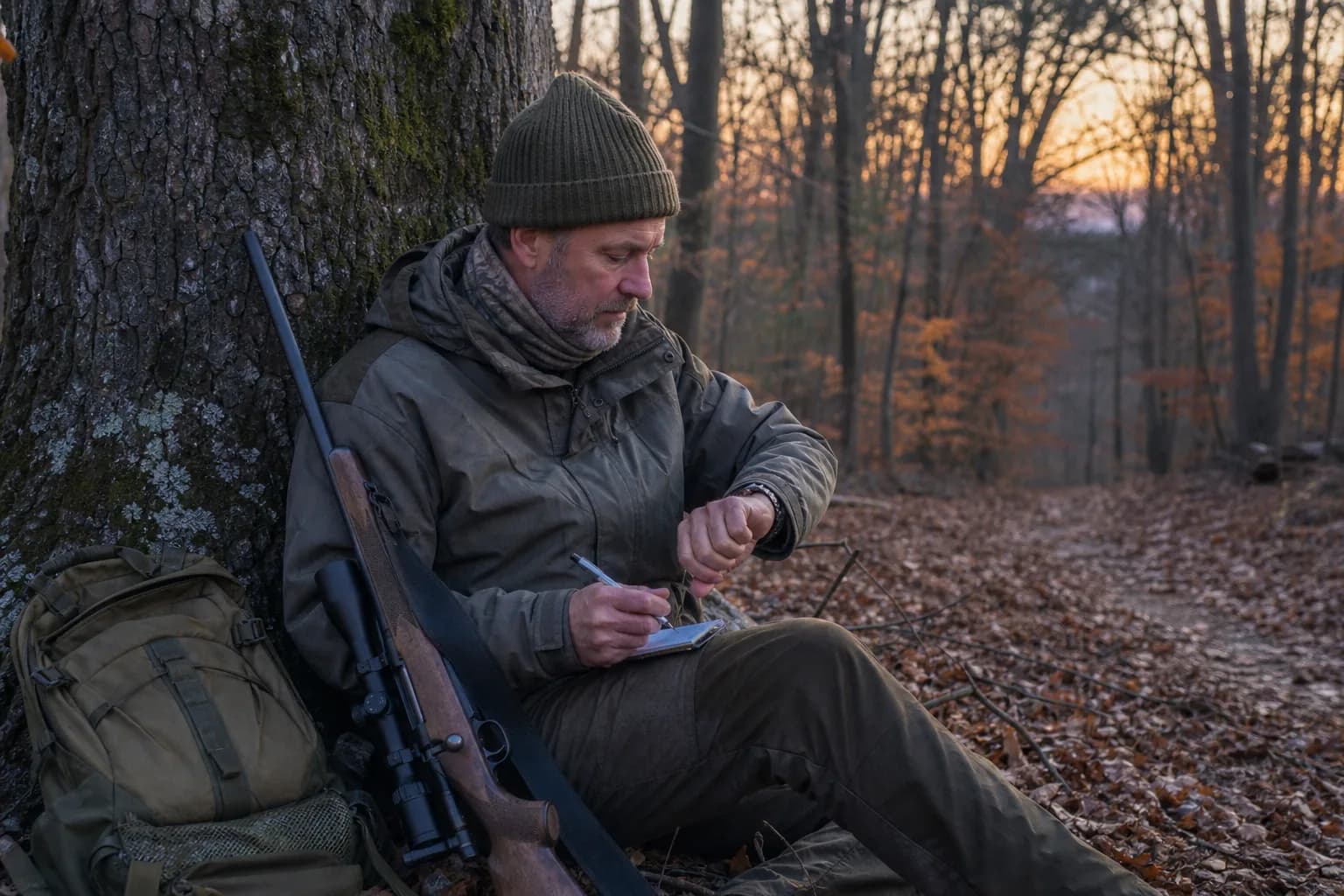
Start with at least 30 minutes when the deer is not visibly down, then extend the wait whenever the shot, reaction or sign suggests liver, stomach or an uncertain hit.
Recovery begins with observation, not movement. Make the firearm or bow safe, keep watching and listening, and record the exact place the deer stood and the last place it was visible. Blood is one clue among several. Color, amount, tracks, hair, shot angle and the deer's reaction must be considered together, and none of them can diagnose a wound with certainty from the field.
The short answer: use a baseline, then adjust
If the deer is not visibly down, official hunter-education sources commonly advise an initial wait before trailing. Massachusetts recommends at least 30 minutes after a firearm shot and 45 to 60 minutes after an archery shot. Texas Parks & Wildlife teaches a general wait of at least 30 minutes to one hour. Missouri's current deer guide says to wait a minimum of 30 minutes and notes that a liver or gut shot may require four hours.
Those numbers are not interchangeable guarantees. The purpose of the wait is to reduce the chance of pushing a wounded deer from cover or a bed. The correct decision uses the least optimistic reasonable interpretation of the shot, reaction and sign.
Wait-time field matrix
| Working assessment | Clues that may support it | Conservative planning range | Recheck before moving |
|---|---|---|---|
| Chest / heart-lung area | Chest shot path, light red or frothy sign, strong initial run | At least 30 to 60 minutes when not visibly down | Do angle, blood and reaction agree? |
| Possible liver | Dark blood, rear-chest angle, slowing, bedding | Several hours; official guidance may use about four | Would entering now risk moving it from a bed? |
| Possible stomach / intestine | Hunched reaction, odor, green or brown material, sparse dark sign | At least four hours in DEC guidance; longer may be chosen | Call a legal handler before contaminating the trail |
| Muscle, leg or superficial wound possible | Bright blood, coarse hair, bone, uneven track, trail that fades | No universal number; assess carefully and seek qualified help | Do not infer outcome from blood volume alone |
| Unknown or conflicting | No sign, uncertain impact, mixed evidence | Treat as the slower plausible hit | Rebuild the shot line before starting a large search |
Four inputs should control the clock
1. Shot path, not the aim point
Reconstruct where the projectile likely entered and exited based on the deer's angle and elevation. The intended aiming point is not evidence that the shot landed there. A steep angle or quartering position can move the internal path away from the visible entry. Write down what was actually seen rather than what was planned.
2. The deer's reaction
A hard run, jump, hunch, stumble or slow walk can add context, but no reaction alone confirms a wound. North Carolina Wildlife cautions that deer may show little obvious response even after a hit. Use reaction to form a cautious hypothesis, then test it against sign at the hit site.
3. Hair, blood and other material
Compare blood color and texture, hair, tracks, tissue, the arrow if recovered and any digestive material. Use the deer blood color chart to organize the clues. If they conflict, do not average them into a best-case answer. Give the slower plausible wound more time.
4. What happens after tracking starts
The clock can restart. A recently used bed with no deer, a deer that rises ahead, or a trail that changes sharply may mean the first wait was insufficient. Mark the location, leave quietly and reconsider. Pressing forward simply because the original wait has elapsed can turn a recoverable trail into a more difficult one.
When a chest hit appears likely
Light red or frothy sign plus a plausible chest path may support using the shorter end of the official ranges. Even then, begin at the exact hit site and follow confirmed sign. Do not skip ahead to where a deer "usually" goes. A high entry, no exit or vegetation can produce less external blood than expected.
If the trail begins well and then ends, return to the last sign and use the method in the step-by-step blood-tracking guide. A promising first patch is not a reason to abandon the process.
When liver or digestive evidence is plausible
Dark blood may be associated with several wound types, so combine it with angle, reaction, odor and digestive material. New York DEC says stomach and intestinal wounds may leave little dark blood, can be blocked internally and may include a strong odor or stomach contents. Its guide says at least four hours is generally appropriate for a stomach hit. Missouri's 2024 guide also says liver or gut shots may require four hours.
This is the moment to minimize disturbance. Keep people away from the suspected route, note where anyone already walked and contact a legal dog handler before a broad search. If a warm or freshly used bed is found empty, back out rather than rushing the next section.
Weather and meat care change the risk balance
Rain or snow may hide visual sign, darkness raises navigation and firearm-safety risks, and warm temperatures increase the need to cool recovered meat promptly. None of those conditions reveals the wound location. They create competing risks that should be discussed with an experienced local handler or conservation officer when the choice is unclear.
Prepare cooling capacity before beginning the hunt. Penn State Extension emphasizes prompt field dressing and refrigeration below 40 degrees Fahrenheit for food safety and quality. That planning reduces pressure to make an impulsive recovery decision after the shot.
Use the waiting period productively
- Record time, shooting position, hit site and last sighting.
- Write the deer's angle, reaction, direction and any impact sound.
- Check the forecast, remaining light and legal recovery restrictions.
- Charge or conserve navigation and lighting equipment.
- Contact the landowner or a legal tracking-dog handler early if needed.
- Review the complete post-shot checklist.
When the chosen wait ends, approach the hit site without walking on the escape trail. If no blood is present, do not immediately assume a miss; follow the systematic no-blood plan.
Sources & field references
- Massachusetts Division of Fisheries & Wildlife - Deer hunting tips
- Texas Parks & Wildlife Department - After the Shot
- North Carolina Wildlife Resources Commission - After the Hunt
- New York State DEC - Leashed Tracking Dog Guide
- Missouri Department of Conservation - Hunting White-Tailed Deer in Missouri
- Penn State Extension - Proper Field Dressing and Handling of Wild Game and Fish
Frequently asked
Is 30 minutes long enough to wait after shooting a deer?
Thirty minutes is a common minimum in official hunter-education guidance, but it is not enough for every situation. Archery equipment, uncertain placement, liver or digestive evidence and a bumped deer can all justify more time.
How long should you wait on a suspected gut-shot deer?
New York DEC and Missouri conservation guidance use about four hours as a minimum or possible wait for stomach, liver or gut evidence. Conditions and local regulations matter, and an experienced legal tracking-dog handler may recommend a different plan for the specific trail.
Related field notes

Blood Tracking Dogs: When to Call and How to Protect the Trail
A trained, leashed tracking dog can follow scent when visible blood fades. Call early, protect the hit site, and confirm the rules before a large search disturbs the trail.

How to Carry a Rifle While Blood Tracking
The best carry method during a recovery keeps the muzzle controlled, the trigger protected, and the firearm secure while terrain and the search task change.

Shoulder or Muscle-Hit Deer: Reading the Trail
Shoulder, leg, and superficial muscle wounds can produce bright blood, hair, or bone without proving a fatal chest hit. Preserve the trail and reassess before pushing ahead.