Blood Tracking Dogs: When to Call and How to Protect the Trail
A trained, leashed tracking dog can follow scent when visible blood fades. Call early, protect the hit site, and confirm the rules before a large search disturbs the trail.
Practical guidance for reading sign, choosing equipment and moving safely on the recovery trail.

A trained, leashed tracking dog can follow scent when visible blood fades. Call early, protect the hit site, and confirm the rules before a large search disturbs the trail.

Neutral-white light is the best starting point for blood tracking. Other colors can change contrast, but their value depends on the surface, moisture, and the user’s vision.

A useful deer blood tracker light has an even beam, dependable runtime, simple controls, and enough weather resistance for the search—not just a large lumen number.
The best carry method during a recovery keeps the muzzle controlled, the trigger protected, and the firearm secure while terrain and the search task change.

Shoulder, leg, and superficial muscle wounds can produce bright blood, hair, or bone without proving a fatal chest hit. Preserve the trail and reassess before pushing ahead.

Dark watery blood, digestive material, odor, a hunched reaction, or a hit far back can indicate an abdominal wound. Back out, allow substantial time, and protect the route.

A liver hit may produce dark red or maroon blood that becomes sparse. Give the deer time, protect the trail, and use shot geometry and beds—not color alone—to guide recovery.

Frothy pink or bright blood can support a suspected lung hit, but the safest recovery decision uses the shot angle, impact point, reaction, trail pattern, and time together.

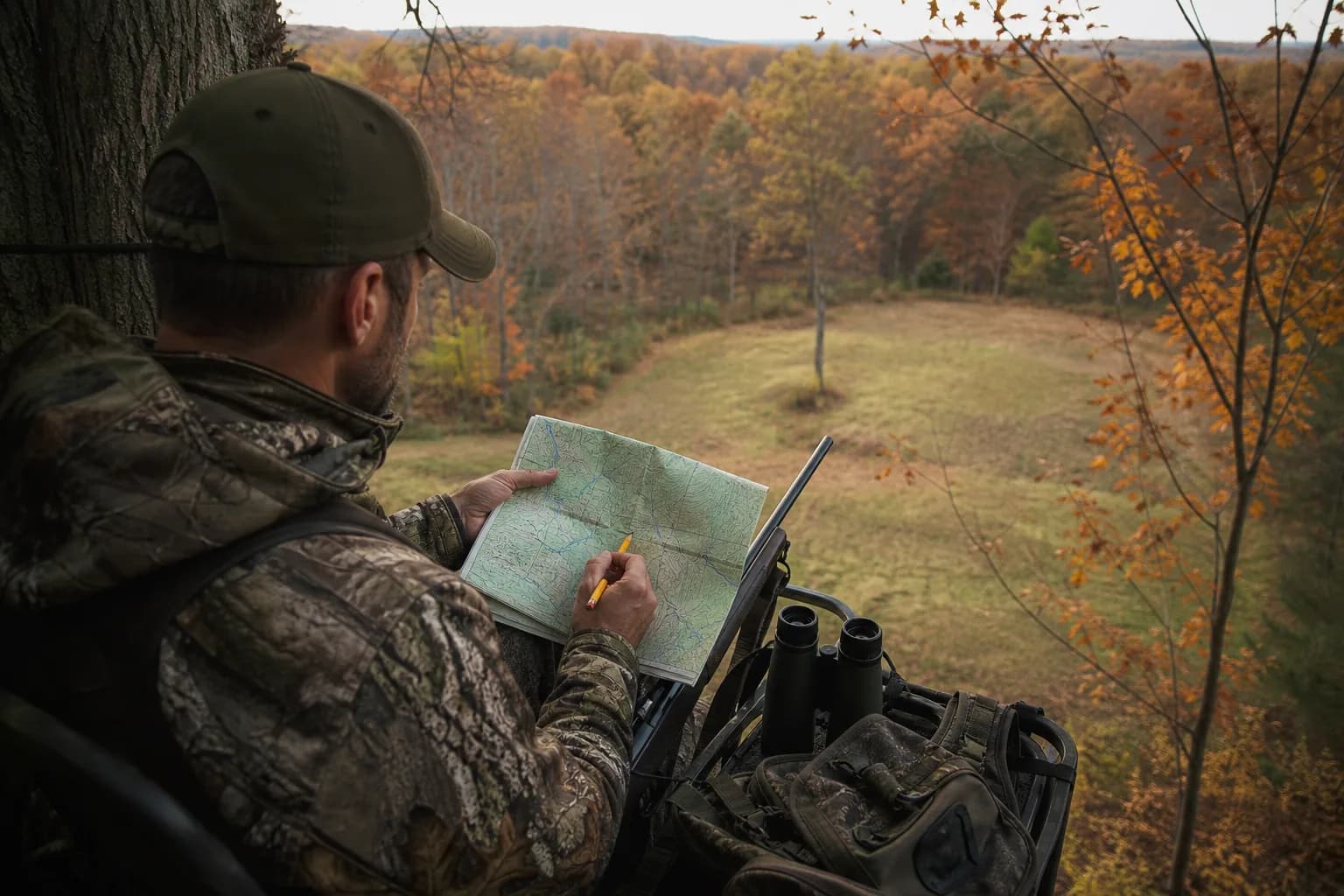
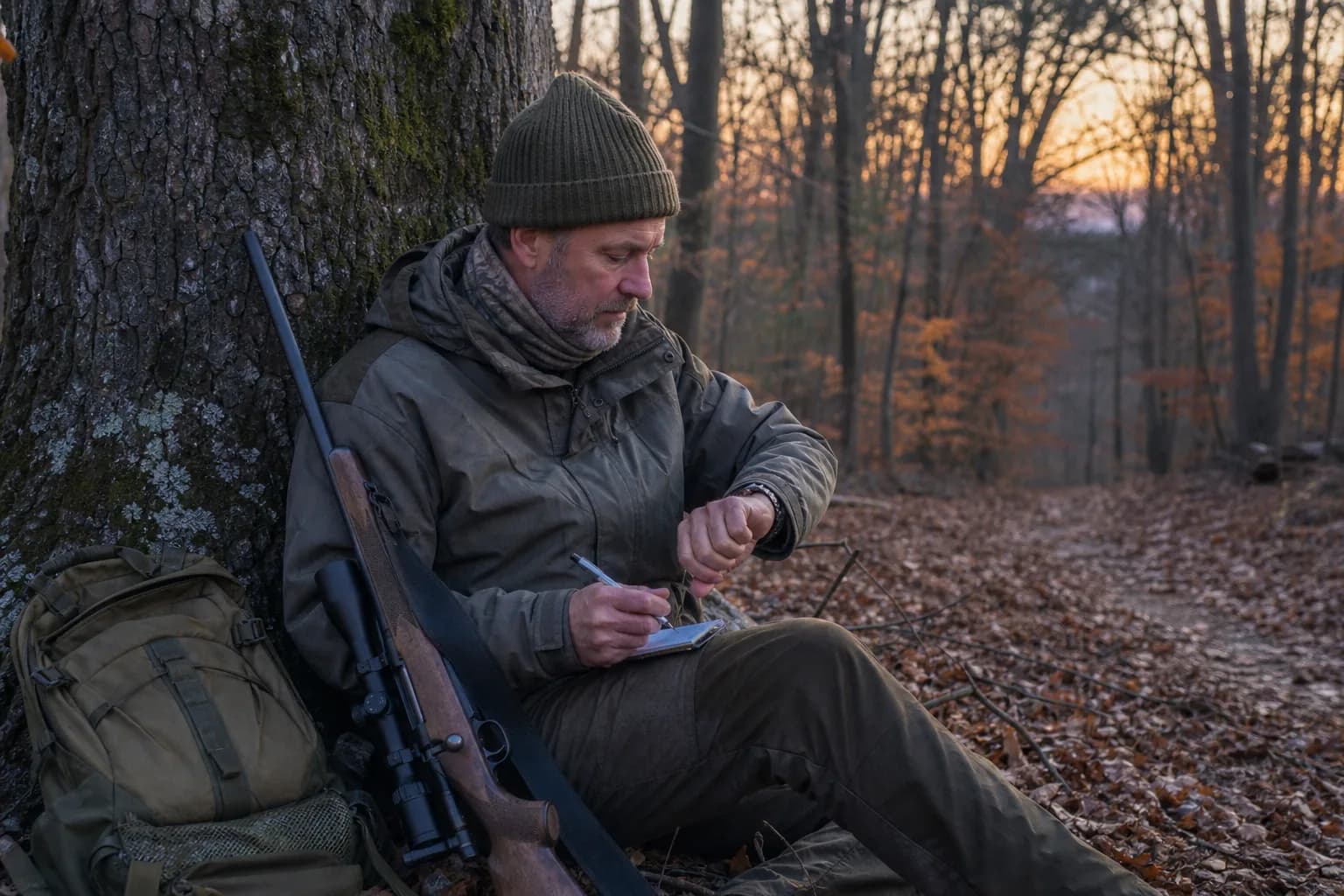
Stay in place, make the weapon safe, watch and listen, mark the deer's position and last sighting, record the time, then choose the wait before approaching the hit site.

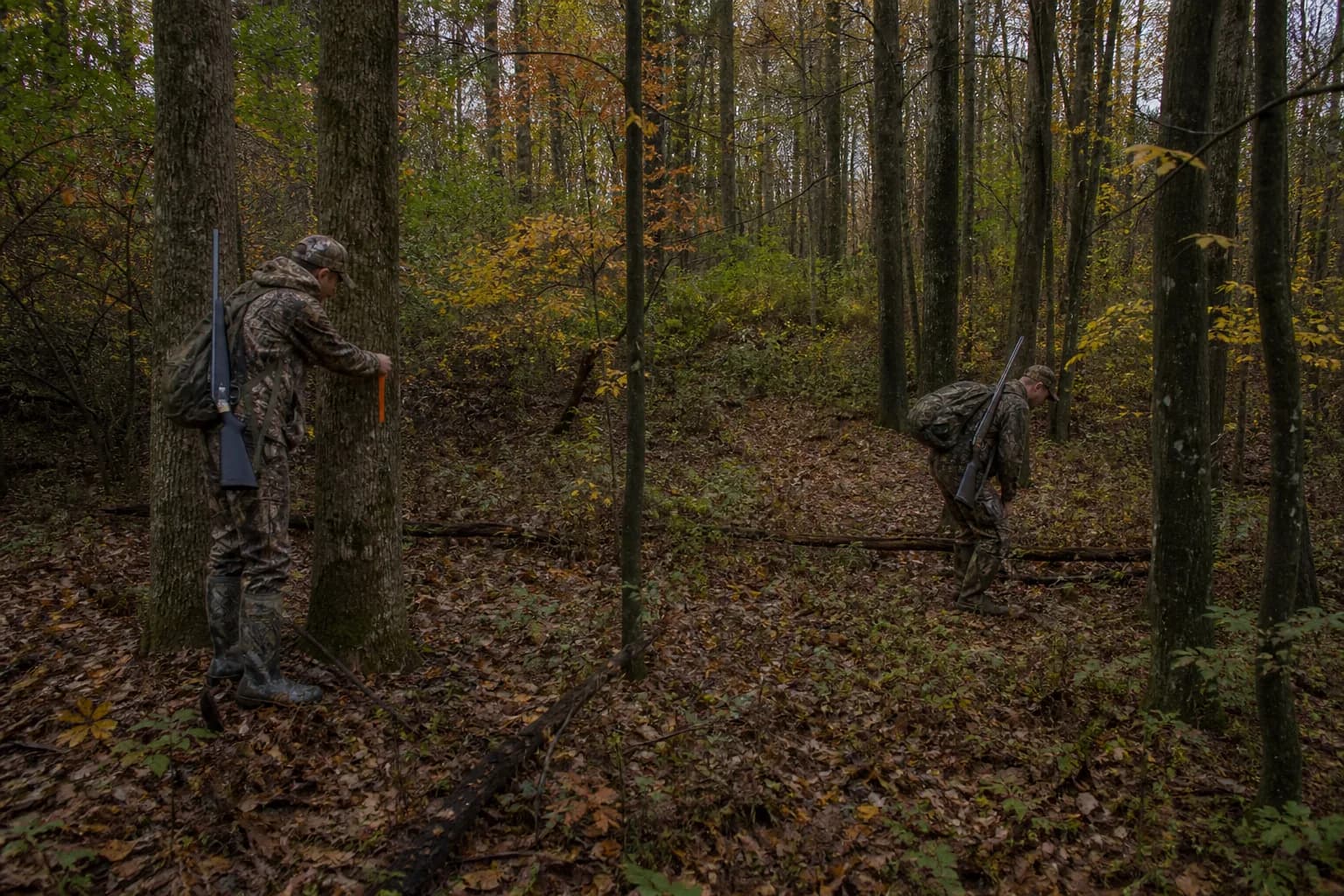
Return to the exact hit site, rebuild the shot line and search for hair, tracks and disturbed cover before expanding from the last confirmed sign in a controlled grid.

Start with at least 30 minutes when the deer is not visibly down, then extend the wait whenever the shot, reaction or sign suggests liver, stomach or an uncertain hit.

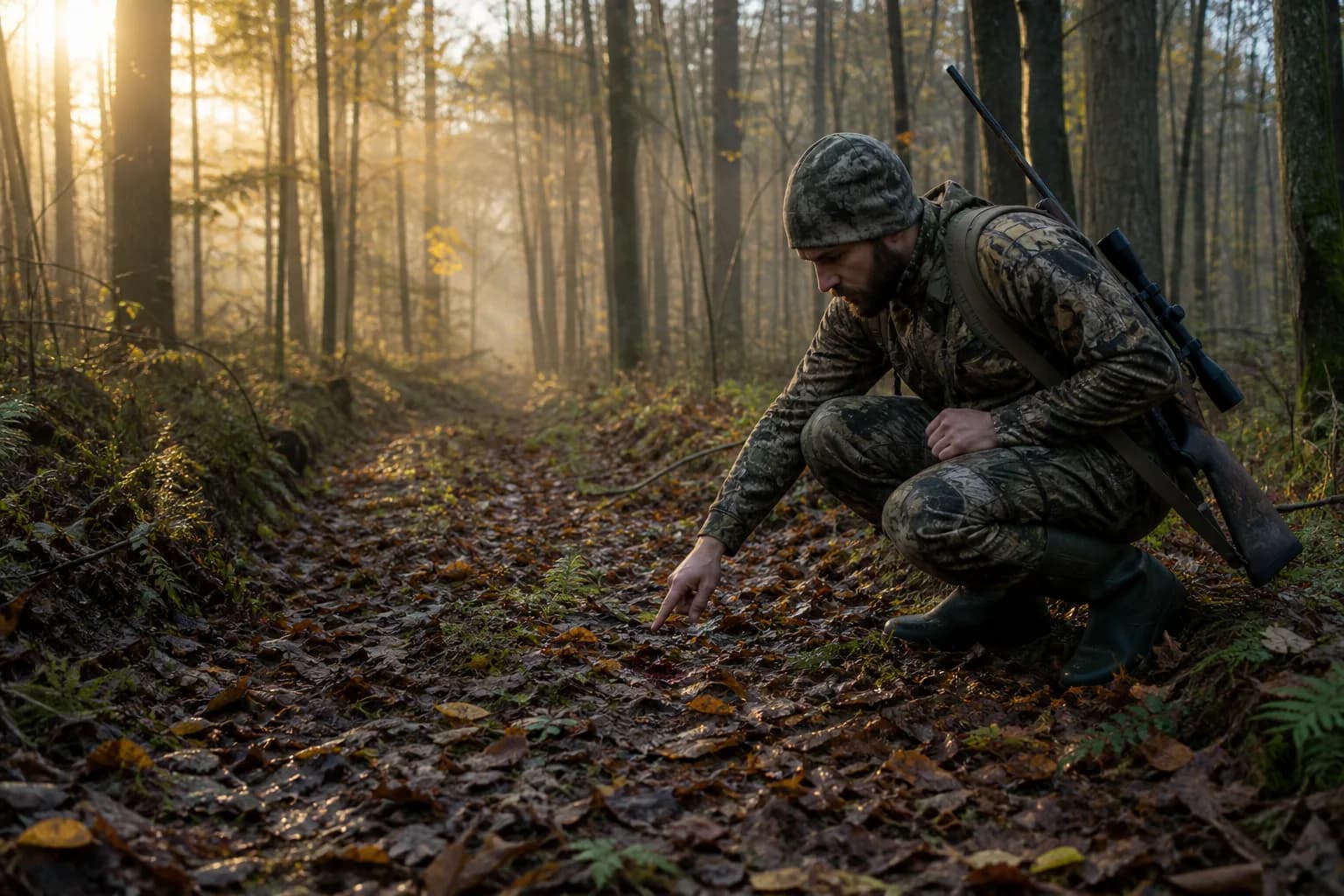
Pink foam, bright red drops, dark blood and digestive material can point in different directions, but color alone never confirms where a deer was hit.

Wait before taking the trail, start at the exact hit site, mark every confirmed sign and let blood, hair, tracks and the deer's reaction tell one consistent story.